Why Does My Indoor Split Air Conditioner Get Mouldy All the Time?
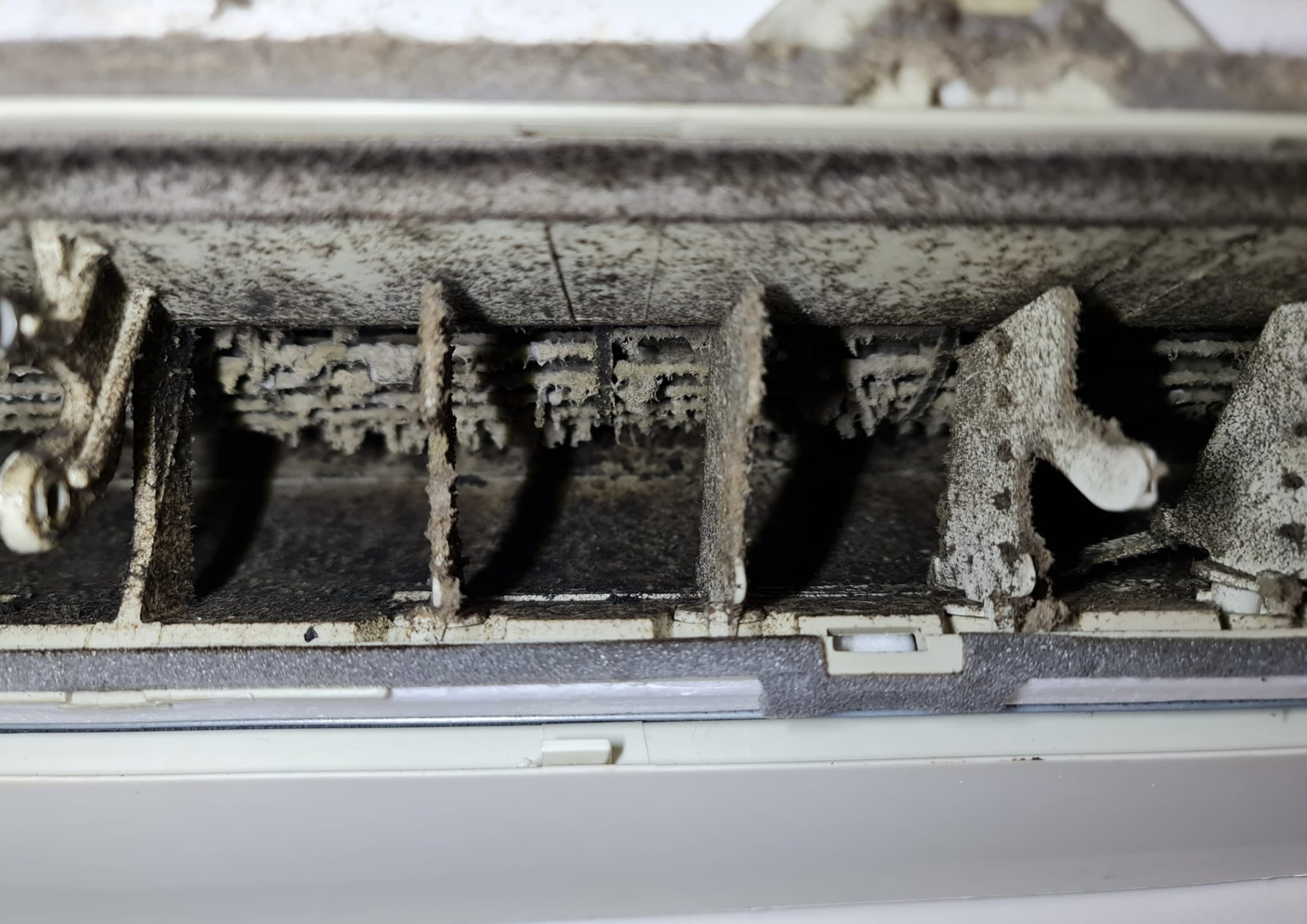
If your wall-mounted split system smells musty or looks mouldy inside — even though your house is clean — you’re not alone. This is a very common issue in coastal Queensland, and it often has nothing to do with poor housekeeping.
On the Sunshine Coast, humidity, warmth and salt air create ideal conditions for mould growth inside indoor air conditioning units.
Let’s explain how mould gets into split systems, why it happens more in some homes than others, and what it means for both your health and your air conditioner.
How Does Mould Get Into Indoor Split System Units?
Mould doesn’t blow in from outside as visible growth — it starts microscopically and grows once conditions are right.
1. Mould spores are already in the air
Mould spores exist naturally in all homes, even very clean ones. When your split system draws air through the indoor unit, those invisible spores pass over internal components.
2. Cooling creates moisture inside the unit
When your air conditioner cools, it removes moisture from the air. That moisture forms condensation on:
- the evaporator coil
- the fan barrel
- internal plastic surfaces
If those surfaces stay damp for long periods, spores can settle and grow.
3. Dust provides food for mould
Even clean homes have:
- fine dust
- skin cells
- pollen
- pet dander
When dust sticks to damp internal parts, it becomes a food source for mould.
4. Drainage issues trap moisture
If the condensate drain is slow or partially blocked, water can sit inside the unit longer than it should — accelerating mould growth.
Why Some Clean Homes Get Mouldy AC Units Faster Than Others
Many homeowners are surprised when mould keeps coming back despite regular cleaning. Common contributing factors include:
High coastal humidity
On the Sunshine Coast, humidity often stays above 60%. That means your AC is constantly pulling moisture from the air, increasing internal condensation.
Low airflow and short cycling
Oversized systems or poor airflow can cause the unit to cool quickly and shut off before internal components dry properly.
Usage habits
Mould is more likely when:
- the unit is switched off immediately after heavy cooling
- very low temperatures are used for long periods
- the system sits unused for weeks with moisture inside
Salt air
Salt attracts and holds moisture. In coastal environments, this means internal components stay damp longer than inland systems.
How Mould Inside Your Air Conditioner Affects Health
Mould inside an indoor unit can impact occupants even before visible growth appears.
Possible effects include:
- headaches or fatigue
- sinus irritation
- coughing or throat irritation
- worsening asthma or allergies
- increased sensitivity in people with chronic conditions
Because split systems recirculate indoor air, mould spores can be distributed throughout the room during operation.
How Mould Affects Your Air Conditioner Itself
Mould doesn’t just affect people — it also affects performance and lifespan.
Over time, mould can:
- restrict airflow
- insulate coils, reducing efficiency
- cause persistent odours
- increase running costs
- lead to corrosion and premature component failure
A mould-affected unit often works harder while delivering less comfort.
Why Cleaning Filters Alone Isn’t Always Enough
Cleaning filters is important — but filters are only the first line of defence.
Mould often grows on:
- fan barrels (out of sight)
- evaporator coils
- internal housings
Once mould establishes internally, professional cleaning is usually required to fully remove it and reduce regrowth.
How to Reduce Mould Growth in Split Systems
Practical steps that help in coastal homes include:
- cleaning filters every 2–4 weeks
- avoiding unnecessarily low temperature settings
- occasionally running fan-only mode to help dry the unit
- ensuring condensate drains are clear
- booking regular professional servicing, especially in humid climates
Final Thoughts
If your indoor split system keeps getting mouldy, it doesn’t mean your home is dirty or that your air conditioner is faulty. In most cases, it’s a combination of humidity, moisture, airflow and coastal conditions.
Understanding why mould forms is the first step to managing it — and protecting both your indoor air quality and your system’s longevity.
If you live on the Sunshine Coast and have concerns about mould in your air conditioner, getting the right advice early can make a big difference.
Call us today 54505000